Mid-season Collection: Women - Men Delivery 24/48h, Free from €90 Satisfaction Guaranteed or Money Back

The largest selection of hats in France


How to choose the best straw hat for optimal UV protection?
Summer is fast approaching, and with it this recurring question: how to effectively protect your skin from the sun without sacrificing your style? While sunscreens remain essential, they're not always enough. Ultraviolet rays are particularly vicious... they attack not only our skin but also our eyes, often neglected in our protection strategies.
This is where the straw hat comes in. Far from being a simple fashion accessory, it represents a formidable physical barrier against UV rays. But beware! Not all hats are equal when it comes to sun protection.
In this comprehensive guide, we'll explore together the secrets of a good UV protection hat. You'll discover how to choose the perfect model according to your needs, your morphology, and your activities. Ready to become an expert on the subject?
Understanding UV protection in hats
Have you ever heard of the UPF index? No, it's not a new cosmetics brand! UPF stands for "Ultraviolet Protection Factor". Unlike the SPF of sunscreens, UPF measures a fabric's ability to block ultraviolet rays.
A hat with a UPF of 50 lets through only 1/50th of UV rays, or about 2%. Pretty impressive, isn't it?
But let's dig a little deeper. Ultraviolet rays are divided into two main categories: UVA and UVB. UVB rays are responsible for sunburn (those painful redness we all know), while UVA rays penetrate deeper into the skin and cause premature aging.
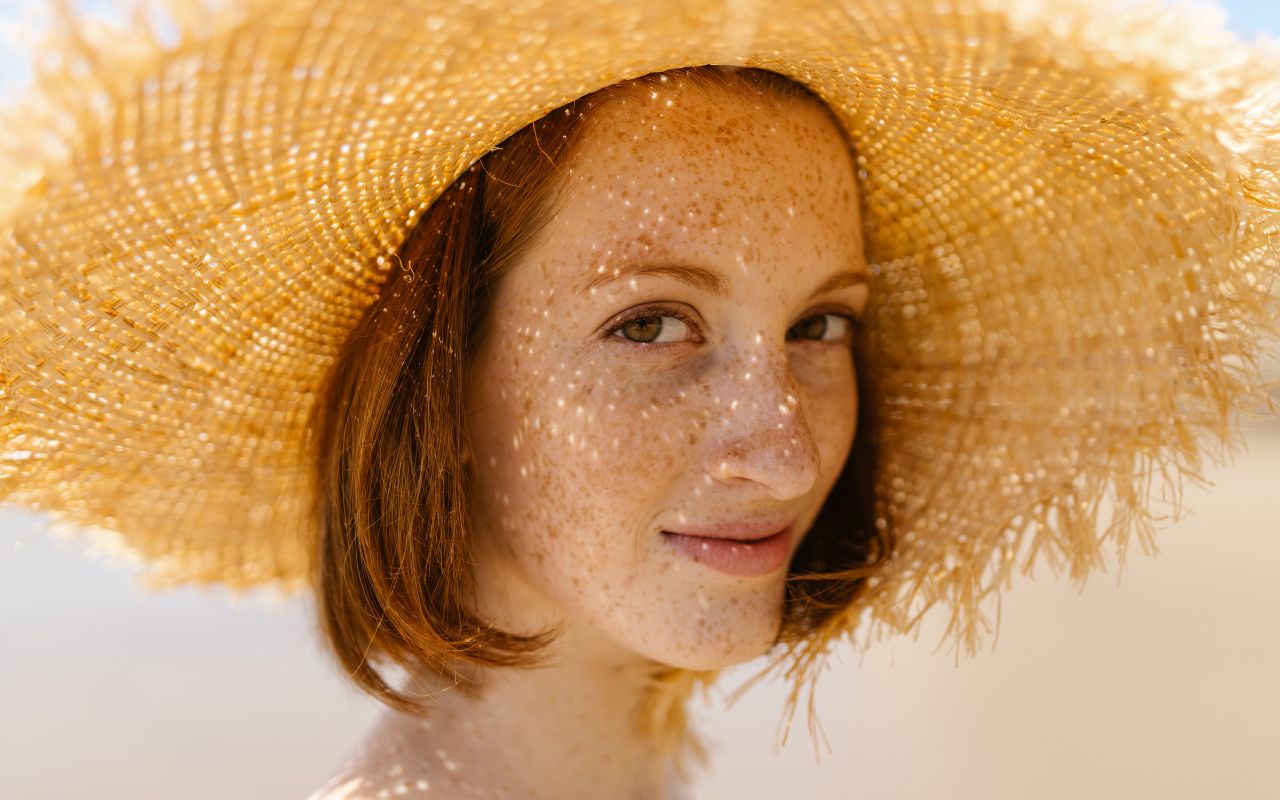
Straw, a natural material par excellence, has surprising properties. Its dense weave creates a physical barrier that reflects some rays and absorbs others. The tighter the weave, the more effective the protection. It's as simple as that!
A good straw hat protects an extended area: the face of course, but also the neck (often forgotten), the ears, and even part of the décolleté depending on the brim width. This "3D" protection remains unmatched by sunscreens alone.
Essential criteria for choosing your straw hat
First criterion, and not the least: brim width. Dermatologists recommend a minimum of 7.5 cm all around for optimal protection. Why this precise measurement? It guarantees that the shade effectively covers the face and neck, even when the sun is at its zenith.
Next comes weave density. Hold your hat up to the light: do you see many small holes? If so, move on! A dense and regular weave forms a continuous barrier against UV rays.
Color also plays a role, contrary to popular belief. Dark colors absorb more UV rays than light colors. However, they also retain more heat. A smart compromise? Opt for medium tones like beige, light brown, or ecru.
The fit deserves your full attention. A hat that moves at the slightest breeze won't protect you for long. The crown shape must fit your skull without squeezing excessively. Too wide, it will fall over your eyes; too tight, it will give you a headache.
Some manufacturers now offer additional UV treatments. These innovations reinforce the natural protection of straw, particularly useful for less dense weaves or light-colored hats.
Types of straw and their protective properties
The Panama remains the king of straw hats! Originally from Ecuador (yes, not Panama), this ultra-fine and tight weave offers maximum protection. The finer and more numerous the strands, the more effective the hat is against UV rays. A real Panama can cost several hundred euros, but its durability and protection are worth it.
Raffia straw appeals with its exceptional lightness. This natural fiber, extracted from the leaves of a Madagascan palm, breathes remarkably well. Perfect for hot and humid climates! However, its generally looser weave requires special attention when choosing.
More modern, paper straw is winning over many followers. Resistant to humidity and easy to maintain, it offers excellent value for money. Its weave can be very tight, guaranteeing good UV protection. Bonus: it comes in many colors!
The natural versus synthetic straw debate is divisive. Natural fibers breathe better and age with elegance. Synthetics are more resistant to weather and maintain their shape longer. It's up to you depending on your priorities!
Hat styles according to your activities
For the beach or gardening, nothing beats a wide-brimmed hat. Its generous silhouette effectively protects from overhead sun. Choose one with a retention cord: sea breezes tend to be mischievous...
In the city, the straw fedora combines protection and urban elegance. Its medium brims (about 6-8 cm) are sufficient for most urban situations. More discreet than a large hat, it pairs perfectly with casual or semi-formal attire.
Ladies, the capeline remains the glamorous option par excellence! Its extra-wide brims create generous shade while asserting a sophisticated style. Be careful on windy days though...
Sports enthusiasts will appreciate the straw bucket hat. Stable on the head, it doesn't hinder movements while providing effective protection. Perfect for hiking, golf, or water sports.
For a more casual look, the modern straw cap revisits the genre. With its rigid visor and straw back section, it combines the advantages of the classic cap and natural protection.
Face shape and hat choice
Do you have a round face? Favor angular shapes and high crowns. Avoid brims that are too wide, which would accentuate the roundness. A fedora or panama with clean lines will suit you perfectly.
A square face requires softening the angles. Opt for slightly rounded brims and a soft crown. Capelines with flowing lines are your friends!
Lucky owners of an oval face, you have carte blanche! This balanced morphology accommodates practically all styles. Take advantage of it to be bold!
Long faces benefit from wearing medium brims and low crowns. Avoid hats that are too tall, which would accentuate the length. A bucket hat or straw cap will create a nice balance.
How to correctly measure your head circumference? Use a flexible tape measure, placed 2 cm above the eyebrows and ears. Note the measurement and add 0.5 cm for comfort. This precision will avoid many disappointments!
Comfort and practicality in daily life
Ventilation can transform a sunny day into torture or pleasure. Look for discreet ventilation eyelets on the crown. These small details allow air to circulate, avoiding the dreaded "pot" effect.
An absorbent inner lining changes everything! It prevents sweat from staining the straw and considerably improves wearing comfort. Favor natural materials like cotton or linen.
The adjustment system deserves consideration. An internal elastic cord proves very practical for fine-tuning the fit. A removable headband offers more flexibility. Some models even feature ratchet systems, like those on bicycle helmets!
Do you travel a lot? Foldability becomes crucial. Some hats fold without damage, others resist this test poorly. Test before buying, or inquire with the seller.
Facing the wind, not all hats are equal. A model that's too light or poorly adjusted will fly away at the first breeze. A retention cord can save the day, even if it's not always very aesthetic...
Care and durability of your straw hat
Caring for a straw hat requires a few simple precautions. For routine cleaning, a soft brush is enough to remove dust. In case of stains, gently dab with a damp cloth, without rubbing.
Drying requires patience and method. Never use a hair dryer or radiator! Let it air dry in the shade, maintaining its original shape. A hat form can prove useful for delicate models.
Humidity represents straw's number one enemy. Always store your hat in a dry place. If you've worn it in humid weather, let it dry completely before storing it.
To maintain the shape, invest in a hatbox or use tissue paper to fill the crown. Avoid placing it carelessly: straw "memorizes" deformations!
Watch for signs of wear: fraying edges, excessive discoloration, loss of weave elasticity. A worn hat protects less well. Better to invest in a new model than to compromise your sun protection.
Common mistakes to avoid
The classic mistake? Choosing based on appearance alone. A magnificent but poorly fitted hat will end up at the back of a closet. Take the time to try it on, walk with it, move your head. Comfort takes priority over aesthetic appeal.
Neglecting neck protection is costly! This sensitive area, often forgotten when applying sunscreen, burns easily. Check that the back brims provide sufficient shade.
A weave that's too loose is like a sieve against UV rays. If you can clearly see light through the straw, look for another model. The beauty of an airy weave doesn't justify inadequate protection.
Forgetting wind resistance is heading toward frustration. How many hats fly away each summer on beaches around the world? A discreet cord can avoid many inconveniences.
Finally, never sacrifice protection on the altar of aesthetics. A straw hat remains above all sun protection equipment. Its beauty must not compromise its primary effectiveness.
Budget and value for money
Prices vary considerably depending on materials and craftsmanship. A synthetic straw hat starts around 20-30 euros. For quality natural straw, expect 50 to 100 euros. Authentic Panamas reach several hundred euros.
Investing in quality often proves profitable in the long run. A good hat lasts for years, while a low-end model will require frequent replacement. Calculate the cost per use rather than the purchase price!
Some brands offer interesting warranties: free alterations, replacement in case of defect, personalized after-sales service. These services sometimes justify an initial premium.
Also consider frequency of use. A hat worn daily deserves a larger investment than a model reserved for vacations. Adapt your budget to your actual needs.
Expert advice from hatters
Nothing replaces trying on in-store! Each head is unique, and sizes can vary by manufacturer. A professional will know how to advise you on optimal fit and possible alterations.
Experienced hatters adapt their advice to your lifestyle. Occasional athlete or gardening enthusiast, city dweller or vacationer, each profile requires a different approach. Don't hesitate to detail your needs!
Current trends mix tradition and modernity. Classic shapes are making a strong comeback, revisited with contemporary details: colorful bands, innovative weaves, technical finishes.
After-sales service often makes the difference. Professional cleaning, reshaping, inner band replacement... These services considerably extend the life of your investment.
Conclusion
The straw hat deserves its place in your sun protection arsenal. Combining effectiveness, style, and durability, it represents a smart investment for your health and your image.
Remember the essential points: minimum brim width, dense weave, perfect fit, and regular maintenance. These criteria guarantee optimal protection and maximum comfort.
Never forget that sun protection isn't limited to vacations. UV rays are present year-round, even on cloudy days. Your skin will thank you for this constant attention.
Ready to take the plunge? Discover our selection of straw hats, carefully chosen to combine protection, comfort, and elegance. Our experts are waiting to guide you in this important choice.
Because after all, why choose between protection and style when you can have both?